
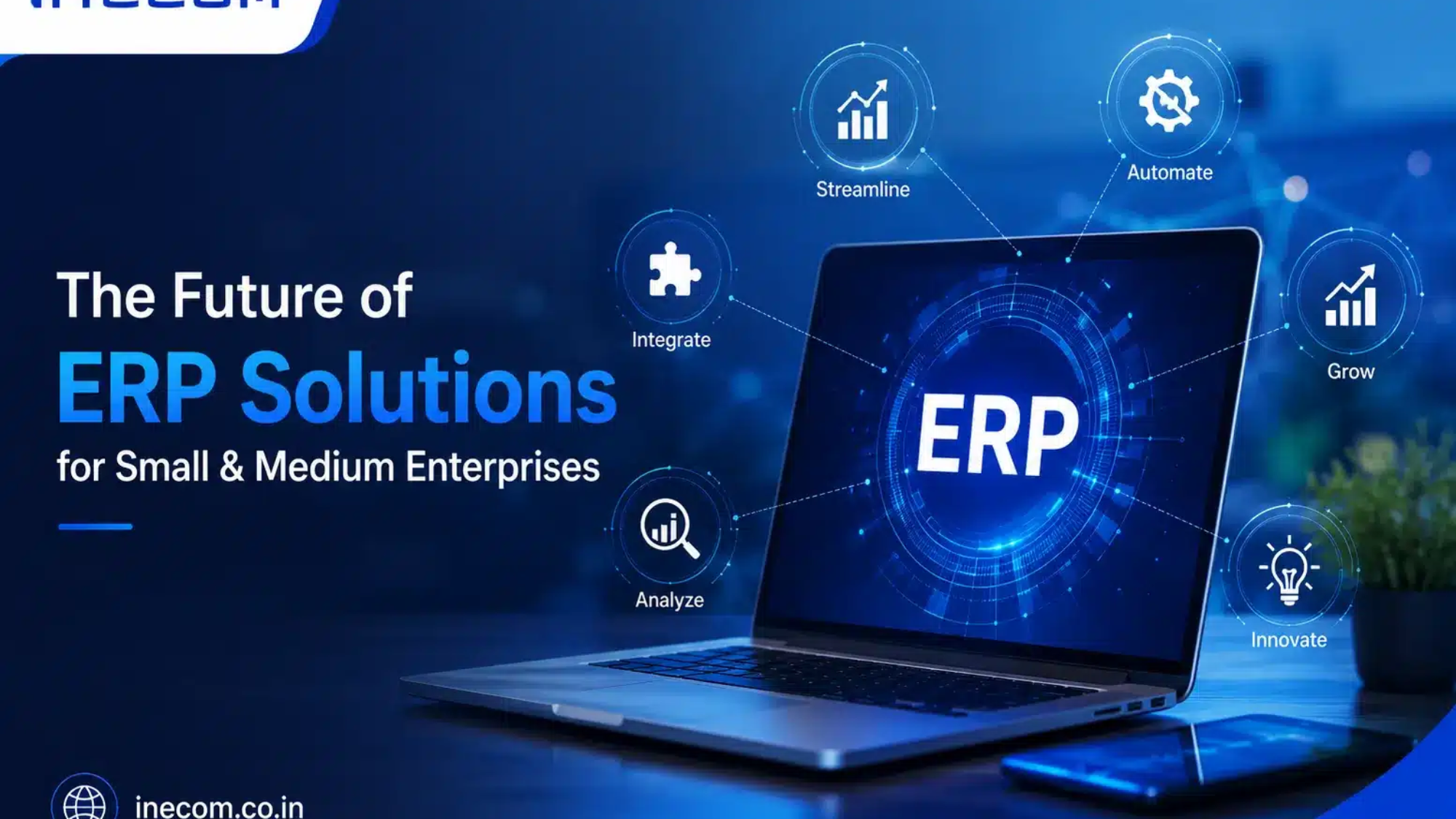
Small and medium enterprises (SMEs) are indeed under increasing pressure to stay competitive, agile, and technology-driven because of the highly competitive market landscape. The businesses that are still relying on traditional methods are facing many modern world operational challenges. This is why Enterprise Resource Planning (ERP) solutions are becoming essential for SMEs looking to streamline operations, improve efficiency, and accelerate growth.
The future of ERP solutions for SMEs is centered around automation, cloud technology, real-time analytics, artificial intelligence, and industry-specific customization. Authorized SAP ERP Partner India, like Inecom, is helping SMEs adopt intelligent ERP solutions that simplify operations while enabling data-driven decision-making.
- The Growing Importance of ERP for SMEs
In the past, ERP systems were well-known to large companies because of their complexity and perceived high implementation cost. But the modern ERP systems like SAP Business One have revolutionised the market by providing user-friendly and cost-effective ERP solutions that are specially crafted for SMEs.
The businesses of today’s day and age require a system to cover finance, sales, inventory, procurement, customer relationship, production, and reporting from a single system. By removing siloed software applications and manual workflows, ERP solutions enable companies to boost productivity and gain insights into their operations.
- Cloud-Based ERP Will Continue to Dominate
Cloud adoption is one of the largest trends in the future of ERP solutions. Cloud ERP systems can be flexible, scalable, and cost-effective for SMEs as they typically require less infrastructure than on-premise systems. This system gives accessibility to business data securely from anywhere, which permits ease of work, quicker collaboration, and better working continuity.
Additionally, cloud ERP can facilitate quicker software updates, strengthen cybersecurity, and seamless incorporation with other business programs.
- Real-Time Data and Business Intelligence
Real-time analytics and intelligent reporting will play a major part in the future of ERP systems. No businesses today can afford delays to access operational or financial information. Businesses need to make decisions and act quickly when there are shifts in the market and customer needs.
By using smart business intelligence applications, SMEs can:
- Record sales activity as it happens
- Accurately keep track of stock levels.
- Predict demand more accurately
- Improve financial planning
- Analyze customer behavior
- Reduce operational inefficiencies
- Automation Will Drive Operational Efficiency
Another significant trend that will influence the future of ERP solutions is automation. Automated workflows are proving to be an effective solution for SMEs to cut down on repetitive tasks, reduce human error, and optimize operations.
Nowadays, ERP systems can automate:
- Invoice generation
- Inventory updates
- Purchase approvals
- Financial reporting
- Customer follow-ups
- Order processing
- Payroll management
Automation eliminates the need for repetitive tasks, freeing up time for businesses to devote to strategic growth and customer engagement.
- Industry-Specific ERP Solutions Will Rise
ERP is more than just about pre-existing software solutions. Today, every business is demanding ERP systems that are industry-specific.
For Manufacturing, Production planning and material requirement tools are essential, and for Retail, Inventory tracking and customer management features are essential. Project management and CRM are the top features of service-based organizations.
ERP vendors in Pune, being a primary SAP Business One partner, are now beginning to provide customized solutions with industry-specific add-ons and integrations to meet industry-specific business requirements.
This customization helps SMEs to be more operationally aligned and increase ROI.
- Mobility and Remote Accessibility
Mobile ERP solutions are expected to play a role in the future of the ERP industry, enabling mobile work and quicker decisions. With SAP Business One mobile apps, users can:
- Access customer information
- Approve transactions remotely
- Monitor sales activities
- Check inventory availability
- Create reports while on the go.
This mobility increases the responsiveness and agility of the business in competitive markets.
- Integration with Emerging Technologies
ERP systems are moving beyond the norm of traditional business management systems. The future will bring more integration with technologies, including:
- Artificial Intelligence (AI)
- Machine Learning (ML)
- Internet of Things (IoT)
- Predictive Analytics
- Robotic Process Automation (RPA)
AI-driven ERP will offer predictive analytics, enabling SMEs to make better-informed decisions about market trends, risk management, and business planning.
- Conclusion
The ERP solutions for SMEs are the future with intelligent, automated, cloud-based, and highly adaptable solutions. In conclusion, ERP systems are essential tools for businesses seeking to enhance productivity, lower operational expenses, and drive future expansion. In a world that is rapidly shifting towards digitalization, ERP systems are poised to be crucial in the ongoing efforts to optimize workflows, cut costs, and pave the way for sustainable growth.
Enterprises, such as SAP Business One, are helping SMEs achieve enterprise-class functionality and capabilities without the premium prices. Modern ERP systems are helping businesses remain competitive in today’s fast-paced business world, ranging from automation and analytics to mobility and real-time reporting.
Choosing an Authorized SAP ERP Partner India and a trusted SAP Business One partner in Pune guarantees that businesses can seamlessly adopt future-ready ERP solutions, fostering innovation, productivity, and sustainable business growth.